The 1989 Upper Deck Ken Griffey Jr. rookie card isn’t just a piece of cardboard, it’s the piece of cardboard. If you collected in the late ’80s or early ’90s, you probably dreamed about pulling it, traded for it, or at least argued with your friends about who had the better copy. Decades later, it’s still one of the most iconic cards in the hobby, and honestly, it still feels a little magical.
The Card That Defined a Generation
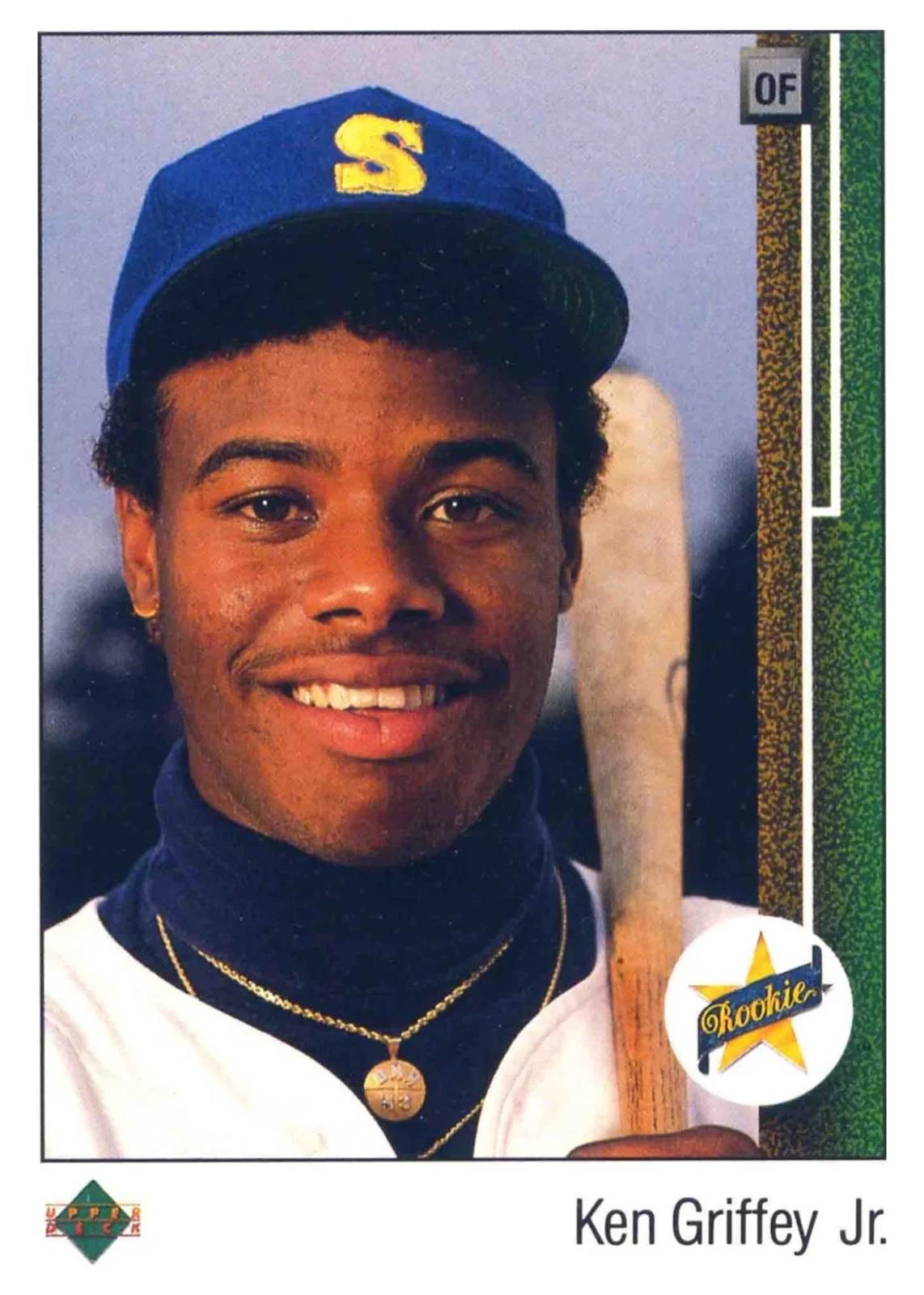
When Ken Griffey Jr. showed up in 1989, he didn’t just look like the future of baseball, he looked like he was having more fun than everyone else doing it. That smile, that swing, that effortless cool factor, it all came through on card #1 in Upper Deck’s very first set.
And that photo? Griffey as a kid in the minors, smiling like he knows something you don’t. It didn’t feel staged or stiff. It felt real. That alone made it stand out from almost everything else on the market.
Why It’s So Sought After
Part of the appeal is simple: Griffey Jr. lived up to the hype. He crushed 630 home runs, made highlight plays look routine, and became one of the most beloved players ever. So owning his rookie card feels like owning a piece of baseball history that actually delivered.
Then there’s the look of the card itself. Upper Deck came in and basically said, “What if cards looked… good?” Glossy finish, crisp images, clean design, and that little hologram on the back that made it feel high-tech at the time. Compared to the competition, it was like upgrading from standard definition to HD overnight.
Condition also plays a big role. Those black borders and glossy surfaces are not forgiving. Tiny flaws stand out, and getting a gem mint copy is tougher than you’d think. That’s why pristine versions can command serious money, even today.
And let’s be honest, nostalgia is doing a lot of heavy lifting too. For a whole generation, this was the card. The one you checked your packs for first. The one you showed off.
How It Elevated the Sports Card Industry
Before Upper Deck arrived, the hobby was a bit… stale. The big brands were churning out cards, but there wasn’t much innovation happening.
Upper Deck changed the vibe completely.
They made cards feel premium. Packs cost more, but you could actually see where the money went. Better materials, better photos, better everything.
They also introduced the hologram, which at the time felt futuristic and helped fight counterfeiting. It gave collectors a sense that these cards were more legit, more secure, and more valuable.
And maybe most importantly, they leaned into the idea of a “chase card.” By making Griffey Jr. card #1, they gave collectors a clear target. That mindset, chasing a specific card in a set, is now baked into the DNA of the hobby.
The Production Controversy
Here’s the twist in the story.
For all its fame and value, the Griffey rookie isn’t exactly rare. It was printed during what we now call the junk wax era, when cards were produced in huge quantities. We’re talking millions of copies.
So why does it still matter so much?
Because condition is everything. Sure, there are tons of copies out there, but finding one in perfect shape is a different story. Many were opened, traded, tossed in boxes, or handled by kids who definitely were not thinking about PSA grades.
There’s also a bit of mystery. Upper Deck never released exact production numbers, which has kept collectors guessing for years. Some argue the scarcity is more about how many high-grade copies exist than how many were printed in total.
That creates a fun contradiction. The card is common… until you want a perfect one. Then suddenly it’s not so easy.
Final Thoughts
The 1989 Upper Deck Ken Griffey Jr. rookie card hits that sweet spot where everything comes together. A superstar player, a groundbreaking company, and a hobby right on the edge of transformation.
It’s fun, it’s nostalgic, and it still holds up.
Whether you’re chasing a PSA 10 or just keeping a slightly beat-up copy in a binder, this card has a way of making you feel like a kid again. And honestly, that might be its greatest value of all.